

Teaser: The new British Prime Minister claims that the Brexit end game starts now– it may be so, but more certain is that uncertainty and volatility will rise once again over the next three months.
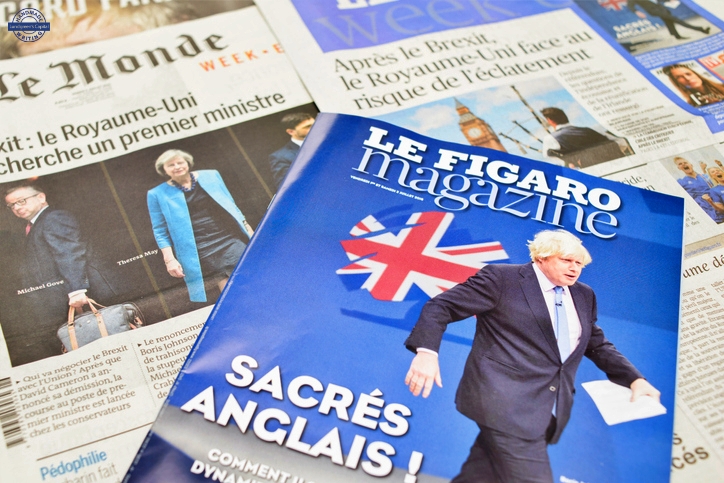
Britain’s battle with itself concerning the Brexit is now moving on after a break where the Conservative Party spent a few weeks electing Boris Johnson as the new chairman. UK’s new Prime Minister has already got the nickname “BoJo” in a part of the British press, and further is Boris Johnson exclusively associated with Brexit.
This also applies to the financial markets, where investors once again need to consider which direction the divorce can go. But there is also the British economy, which fundamentally should be in the focus of the financial markets, but once again, one explores how politics in recent years takes up more attention in the financial markets than it did before.
My assessment of the general feeling in the financial markets is that a Brexit with a deal is equal to growth again, whereas a hard Brexit leads to negative growth.
In my opinion, a solution without tariff barriers is the version that has the least impact on economic growth and trade, thus, I am probably in line with the majority in the financial markets.
However, my view on what affects UK’s growth and the pound Sterling most negatively is the ongoing postponement of the final decision about the Brexit, and not a hard Brexit as such. No matter how the divorce would have been years ago, everything from stock markets to trade would have corrected by now. There would have been winners and losers depending on the Brexit deal, additional tariffs might have been introduced with possible longer customs clearance time on certain products. Already now, a new economic life would have been normal, but instead, the transition period that Britain has to go through is still waiting ahead- maybe.
For what seems like a long time, I have considered a number of companies in the FTSE UK 250 index (company number 101 to 350 in the UK stock market measured by market value) as particularly exciting investment opportunities when the Brexit deal finally comes into place. This is still the case, but for every quarter that has passed, the list of interesting shares has been reduced, and I am still awaiting the final Brexit solution before the buy signal is given. Several investors I speak to have the same attitude, which is an indication that both the stock market and the pound would have been somewhat higher today if the Brexit challenge had been solved long ago.
This eternal uncertainty can be devastating for any economy and that nervousness has quite understandably surrounded Great Britain’s economy since the Brexit vote. Both the consumer confidence and companies trust in the future have taken some huge swings, which is to be expected, given the size of such an economic divorce like it is to leave the EU.
Conversely, the UK economy has shown good robustness since the Brexit vote, and I once again argue that the greatest damage origins from the prolonged Brexit process due to the political infight in the British Parliament.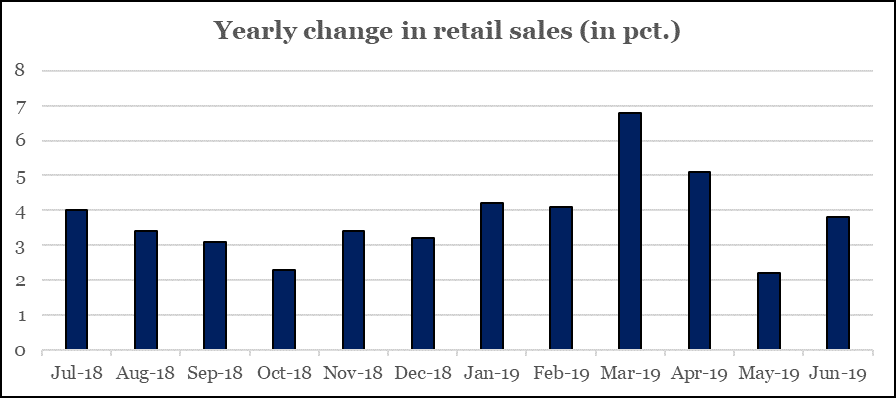
As graphic one shows, retail sales are still at a satisfactory level, which is supported by a continued good wage growth. Many other economic indicators also give the same picture, and even the housing market has generally regained ground within the past six months (graphic two). However, the London property market is still trending down, and the nationwide price trend is supported by a declining supply of houses for sale. Some economists argue that it is linked to renewed uncertainty about the country’s economic direction, now that the Brexit is officially approaching on October 31.
During the transitional period or crisis that the British economy will undergo before the Brexit is finally settled, I find it particularly interesting how UK’s central bank, Bank of England, handles the situation. Immediately, one might expect interest rates to be kept as low as possible, and to be lowered further with the prospect of interest rate cuts in Europe and the US.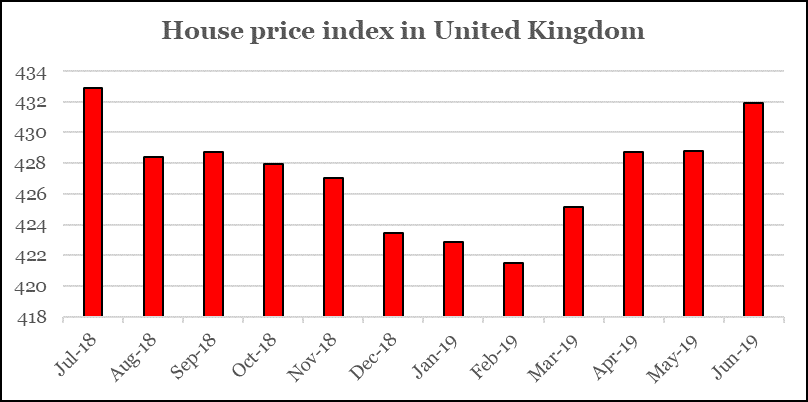
This is not necessarily how the Bank of England views the situation. In an interesting interview on Tuesday 23rd July in the Financial Times, the central bank’s chief economist, Andy Haldane, explained why he doesn’t think the Bank of England should cut the interest rates right now. Despite possible interest rate cuts in Europe and the United States, Haldane is precisely referring to the continued robustness of the UK economy as the argument for not lowering interest rates.
Other members of the Monetary Policy Committee have a softer view of the outlook, and several members of the Committee have expressed opinions leaning towards an interest rate cut.
Haldane is aware of this, and I assess his comments as he also expects a growth decline in the second quarter. However, the cooler economic outlook does not seem to worry the chief economist.
He further mentions that in August, the Bank of England, in their inflation report, will deal with how the central bank believes the British economy could respond to various scenarios of the Brexit. I expect that monthly report to be of greater interest than how monthly reports from central banks normally are.
The financial markets will once again deal with the risks of a hard Brexit divorce that will be spiced up with strong rhetoric from Boris Johnson. I expect it will weigh on the British stock market and the Pound to some extent, but on the contrary, even a hard Brexit cannot be a surprise to many anymore. If the Bank of England keeps interest rates unchanged, I do not regard it as a market mover.
But politics once again brings the financial markets to the test next month. Two local elections in Brecon and Radnorshire can reduce Boris Johnson’s majority in the House of Commons to just one mandate. In case of that scenario, I expect that speculations on a new parliamentary election will spiral-off, which comes on top of the final Brexit negotiations, i.e. volatility will increase.
My assessment is that the happenings over the next few months will result in headwinds for the UK growth and cool the mood amongst the consumers in the United Kingdom- in response to this, my best bet is that Boris Johnson will open up public spending significantly in an election campaign.
Surely, the financial markets will have plenty to do with all the news and directions from London in the coming months.