

Teaser: The Covid-19 crisis continues to command attention all around the world, but investors could be challenged by old cases like the Phase One trade deal between the US and China.
For 2020, China has agreed to purchase USD 36.5 billion worth of agricultural products from the US and its farmers. The deal is a part of the “phase one” trade agreement between USA and China that was signed in January and is crucial for the relationship between the two superpowers. In total, China must purchase a total of USD 80 billion worth of agricultural products this year and next year. But as the American Farm Bureau Federation (AFBF) quietly concluded about a month ago, China needs to beef up the agricultural import from USA to meet the phase one targets.
Right now, the Covid-19 crisis and other domestic troubles are haunting the American economy and the US President. This takes attention, but not fulfilling the promises to President Trump’s core voters will be noticed in the Oval Office in the White House, and in about 5 months, the President will need the votes. A renewed trade dispute between Washington D.C. and Beijing will certainly affect, though not necessarily hit, the global financial markets.
In all fairness, the AFBF mentions that the United States Department of Agriculture (USDA) recognises that China is opening up for more American agricultural export. On the other hand, it doesn’t change the fact that China just imported for about USD 3 billion in the first quarter (the Chinese count is USD 5 billion). This is far from the 2020 target of USD 36.5 billion, which is why this development is interesting for investors and the financial markets participants to pay attention to.
There are seasonal swings in the agricultural trade between USA and China, but even if corrected for these factors, AFBF has calculated that the agricultural export from US to China must reach USD 22 billion alone in the fourth quarter of this year, which is unrealistic.
The phase one trade agreement also includes three other main sectors where the American export should be increased: manufactured goods, energy, and services. If the export within these sectors exceeds the agreement, then this would probably satisfy Washington, but there are no indications that the three sectors will balance-out the missing agricultural export. Put in another way, the phase one trade deal that was signed in January is about to blow up in the American election year.
So far, it has not created any tensions, but one never knows. It might be that the US government is satisfied with the improvement compared to prior years, i.e., the goal was not reached, but the situation got better. It could also very well be how the feelings are right now, and therefore, not an acute thread to financial markets and the investors.
But despite all these explanations and precautions, then something went wrong during the trade negotiations, as one or both parties forgot the real world, the markets, and it shows how difficult it is to regulate a trade balance.
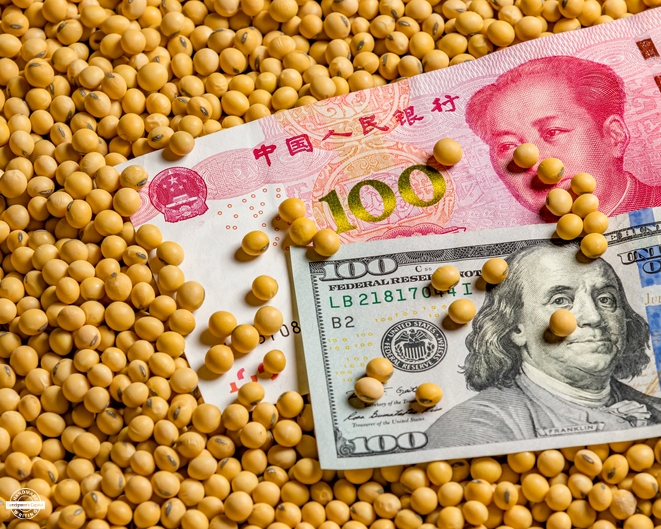
Almost two-thirds of the American agricultural export to China is just one single product- soya beans. Cotton comes in as number two, with just five pct. It underlines how important the soya bean export to China is for the American farmers, every bean counts, so to say.
The fundamental mistake in the trade agreement about agricultural products is the strong focus on dollars instead of volume. The American government targets a reduction in the trade deficit, which leads to a thinking in dollars, though importers and consumers think in tons and kilos. The phase one agreement relates to the prices back in 2017, but the current price for soya beans is 10 to 15 pct. lower, which alone gives a challenge compared to the agreed target. Though it’s not the worst problem, because at present, the Chinese importers are hardly buying the American soya beans.
Brazil has had a record harvest of soya beans, which naturally pushes the prices down, and with the Brazilian real in a debilitated state, it means that Chinese importers can purchase the soya beans in Brazil at a price about 20 pct. lower than in the USA.
One could fear that the US trade negotiators trust that when they make an agreement with Beijing, then the deal is law in China, but it’s not how China works. The Chinese economy is actually very liberal in many ways and the phase one result, more than anything else so far, proves that this kind of trade regulation is difficult to manage and likely to fail.
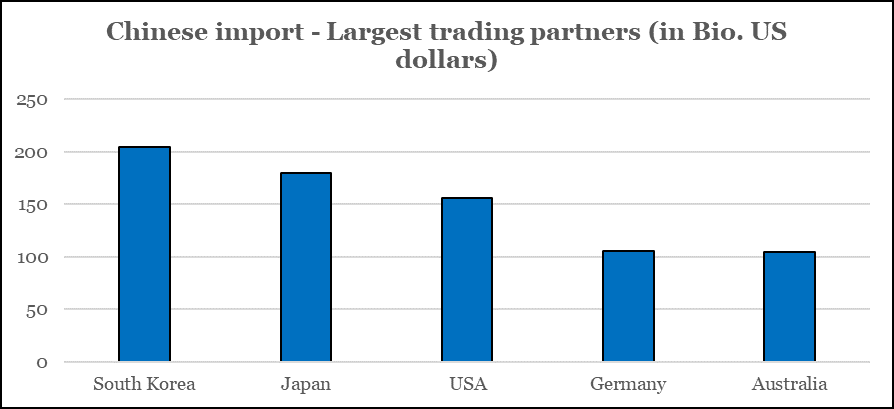
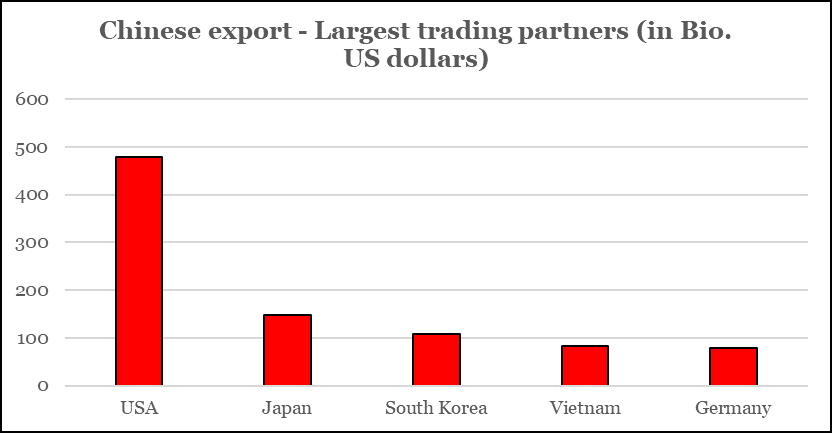
As graphics one and two show, China’s exports to the United States is quite extreme, but conversely, from a Chinese point of view, this is the only overall trade balance disorder, as the problem is not pronounced towards other countries. My assessment remains that China has no problem reducing the trade balance surplus versus the United States, but at the same time, Beijing does not consider a reduction in China’s trade surplus as a rescue of global growth. That said, there is a continuing latent risk that Beijing does not have great fear of a new trade war with the United States, and therefore, a fierce conflict over the phase 1 results has a potential to develop.
In terms of how I use the development in my professional risk assessment is that the trade deal is under pressure, but so far, not a strong volatility generator. The issue is on my radar screen, but if the trade issue escalates, I trust that the financial markets will include the likelihood of Trump’s re-election, which currently might be fading.